
Lowering Health Claims with AI Body Scan APIs in Wellness Programs
An analysis of how health insurance companies are embedding AI body composition scanning into their member apps to track metabolic health markers, personalize premiums, and reduce long-term claims.
verified Published by the WorkoutX team — builders of the exercise GIF API used by fitness app developers. Learn more
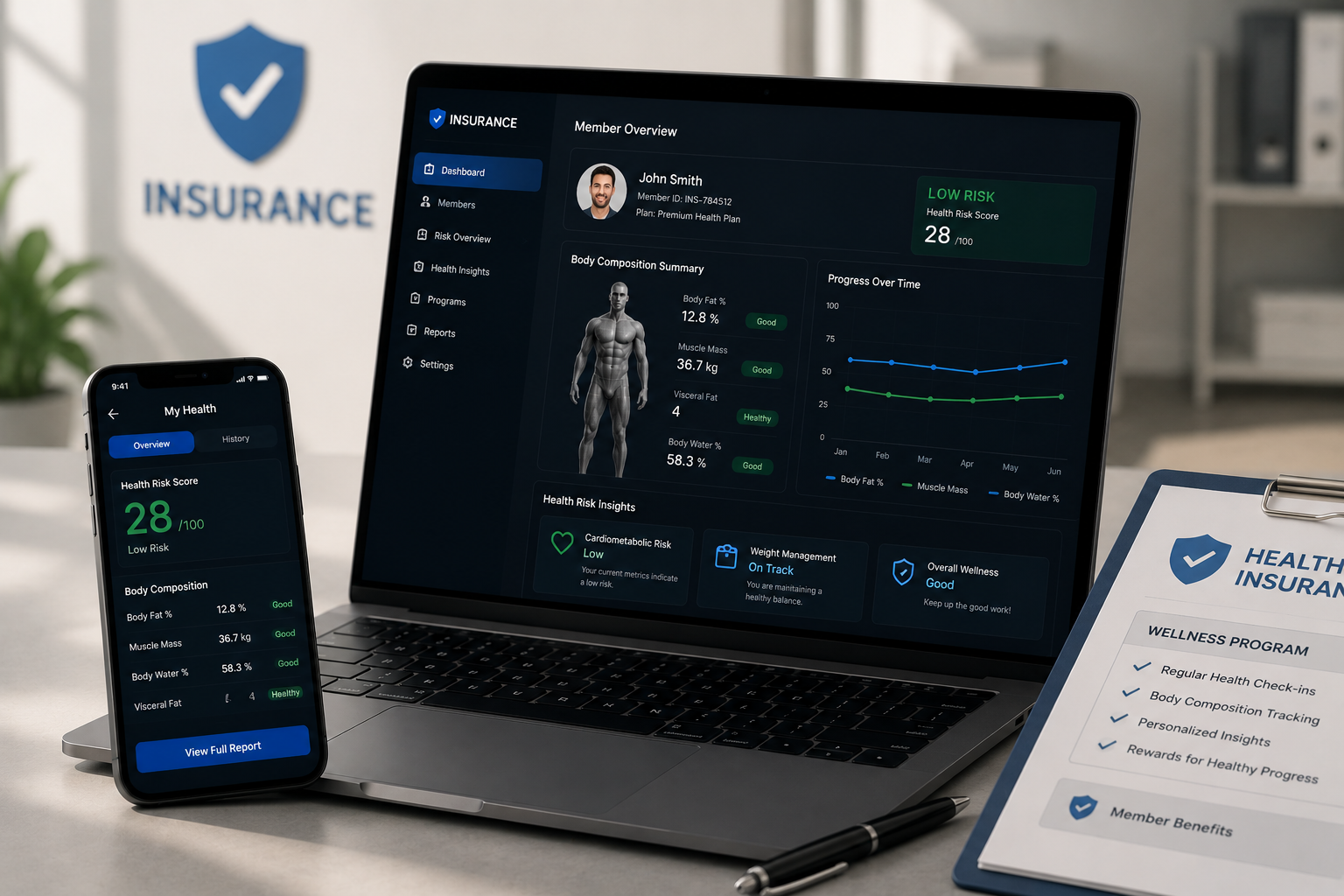
Preventive Care and Actuarial Cost Containment
For health insurance providers, cost containment is directly tied to preventive healthcare. Chronic metabolic conditions—including type 2 diabetes, hypertension, and cardiovascular diseases—account for over 75% of all healthcare expenditures. Early detection of central adiposity and abnormal fat distribution is key to stopping these diseases before they result in expensive hospitalizations.
Integrating AI body scanning into member wellness apps enables insurers to deploy screening at scale. Instead of requiring members to visit diagnostic clinics, insurers offer an instant, camera-based body fat and visceral fat indicator assessment that helps catch risk factors early.
Gamifying Member Wellness Initiatives
To drive sustained healthy behaviors, modern insurance platforms utilize gamified wellness programs. Members who log daily activities, complete workouts, and maintain healthy metrics earn points, gift cards, or direct premium discounts.
A major challenge for insurers is verifiability. Self-reported metrics are easily manipulated. A camera-based body composition API provides a reliable check-in mechanism. By requiring members to verify their body composition via bi-weekly or monthly body scans, insurers ensure that rewards are distributed fairly and based on real, physical outcomes.
Engagement Outcomes: Actuarial studies indicate that members who track progress visually are 50% more likely to maintain healthy lifestyles over 12 months, leading to a direct drop in primary care claims.
The Fallacy of BMI in Actuarial Underwriting
Underwriters have long relied on Body Mass Index (BMI) because it is simple to calculate. However, BMI is a blunt instrument. It consistently misclassifies athletic individuals with high muscle mass as 'overweight' or 'obese,' while failing to identify 'normal-weight obese' individuals who carry dangerous levels of visceral fat despite a low total weight.
By utilizing a camera body composition API, insurers can capture accurate skeletal muscle index, lean mass percentage, and localized circumference metrics. This permits underwriters to construct highly precise risk profiles, leading to fairer pricing and targeted wellness interventions.
Integrating the API into Member Apps
Developing a progress-tracking workflow inside a member mobile application is simple. Below is a JavaScript integration example that uploads the member's photo and biometrics to the REST endpoint:
async function submitMemberScan(imageUri, biometrics) {
  const form = new FormData();
  form.append('photo', {
    uri: imageUri,
    type: 'image/jpeg',
    name: 'member_scan.jpg',
  });
  form.append('height_cm', biometrics.height);
  form.append('weight_kg', biometrics.weight);
  form.append('age', biometrics.age);
  form.append('gender', biometrics.gender);

  const response = await fetch('https://api.workoutxapp.com/v1/scan', {
    method: 'POST',
    headers: {
      'X-WorkoutX-Key': 'INSURANCE_PORTAL_API_KEY'
    },
    body: form,
  });

  return await response.json();
}
Ensuring Compliance and Data Security
Member health information is highly sensitive. The WorkoutX API utilizes an in-memory, stateless pipeline that analyzes the image and deletes it immediately, leaving no persistent record of patient photos on our servers. This ensures compliance with HIPAA and GDPR regulations, protecting insurer systems from data liability.