
AI Body Composition API for Healthcare Providers in California, Texas & New York
This clinical guide details how medical clinics, private practices, and healthcare systems in California, Texas, New York, Florida, and Illinois are integrating AI-powered camera body composition tools into patient care workflows and EHR systems.
verified Published by the WorkoutX team — builders of the exercise GIF API used by fitness app developers. Learn more
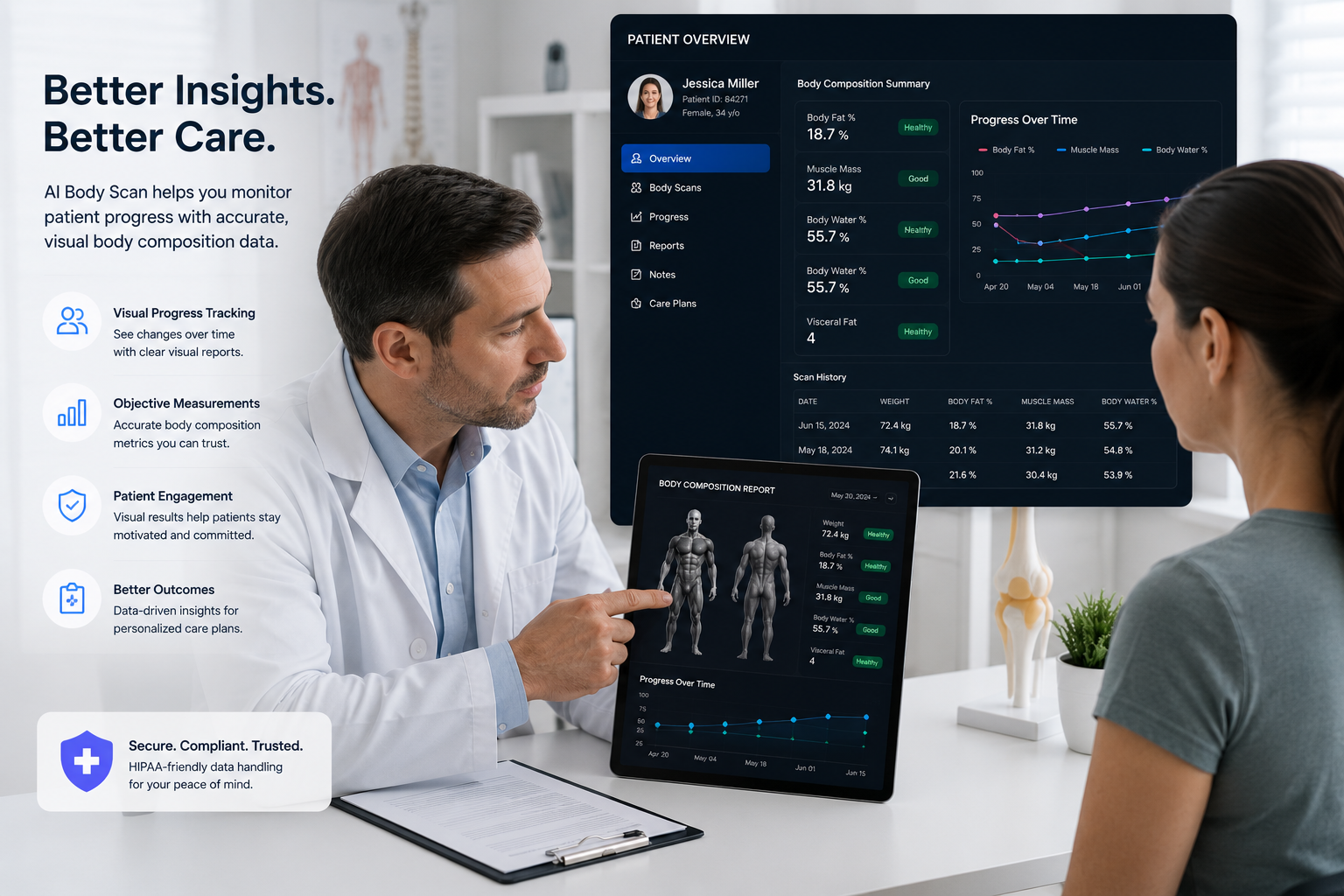
Clinical Upgrades in CA, TX, NY, FL & IL
Healthcare providers and medical clinics across major health hubs, including California (Los Angeles, San Francisco, San Diego), Texas (Houston, Austin, Dallas, San Antonio), New York (NYC, Albany), Florida (Miami, Orlando, Tampa), and Illinois (Chicago), are rapidly upgrading from BMI metrics to camera-based AI body composition tools.
Clinics in California, Texas, and New York are incorporating digital anthropometry to support obesity treatments, orthopedics, physical therapy, and cardiometabolic monitoring. This allows clinics to offer advanced patient assessments remotely, expanding access to care.
Validation: AI Body Scanning vs DXA Scans
Dual-Energy X-ray Absorptiometry (DXA) remains the gold standard for body composition analysis, but is costly ($150-$300 per scan) and exposes patients to radiation. Camera-based AI body composition estimates achieve strong clinical correlation (within ±2-3% of DXA results) by utilizing MediaPipe pose keypoints combined with advanced predictive models.
Clinical Study Insight: In comparative trials, AI-powered camera scans demonstrated highly consistent tracking of lean mass changes and fat distribution, making it an excellent tool for continuous patient monitoring.
EHR Workflow & API Integration
Clinics can embed the camera scan directly into patient-facing intake portals. When the patient snaps a photo, the API returns a structured JSON payload that is pushed into EHR databases (such as Epic or Cerner).
import requests

def integrate_patient_metrics(patient_id, image_path, biometrics):
    url = "https://api.workoutxapp.com/v1/scan"
    headers = {"X-WorkoutX-Key": "CLINICAL_API_KEY"}
    payload = {
        "height_cm": biometrics['height'],
        "weight_kg": biometrics['weight'],
        "age": biometrics['age'],
        "gender": biometrics['gender']
    }

    with open(image_path, "rb") as img:
        response = requests.post(url, headers=headers, data=payload, files={"photo": img})

    if response.status_code == 200:
        result = response.json()
        # Map to EHR databases (e.g., Epic/Cerner FHIR Observation resources)
        save_to_fhir_observation(patient_id, {
            "body_fat": result['body_fat_percentage'],
            "muscle_score": result['muscle_score'],
            "waist_circumference": result['measurements']['waist_cm']
        })
Chronic Disease Management applications
AI body scanning plays a critical role in chronic care. In cardiology practices in New York or endocrinology clinics in Texas, physicians use fat distribution metrics to assess visceral fat accumulation, a primary risk driver for cardiovascular diseases and diabetes.
FDA, HIPAA and Compliance standards
The WorkoutX API complies with HIPAA regulations by ensuring photos are processed entirely in memory and never stored on disk. This meets the strict data security requirements of clinical networks in California, New York, Texas, Florida, and Illinois.