
Watermarked 360p preview. Through the API this animation plays without the watermark at 600 × 720, 30 fps. See plans
Upper Arms · Body Weight
Chin-Up (Isometric and Negative)
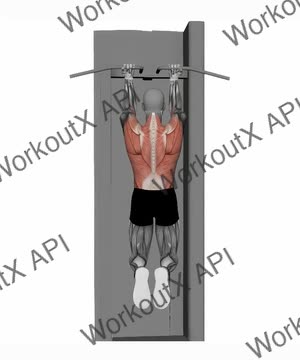
Chin-Up (Isometric and Negative) is an intermediate compound strength exercise that works the biceps (upper arms), with the shoulders and forearms assisting. It needs only a pull-up bar. A typical prescription is 2-3 sets of 30-60-second holds, and it burns about 6.1 calories per minute.
- Target
- Biceps
- Body part
- Upper Arms
- Equipment
- Body Weight
- Category
- Strength
- Mechanic
- Compound
- Force
- Static
- Sets × reps
- 2-3 × 30-60 sec hold
- Calories / min
- ≈ 6.1 kcal
Primary muscles
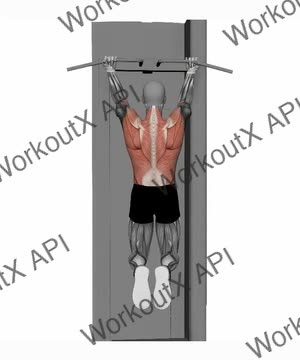
- Biceps · Biceps Brachii
- Back · Latissimus Dorsi
Secondary muscles
- Shoulders · Deltoids
- Forearms · Brachioradialis
How to do Chin-Up (Isometric and Negative)
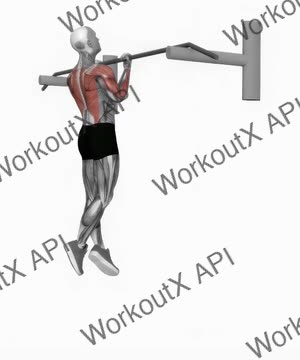
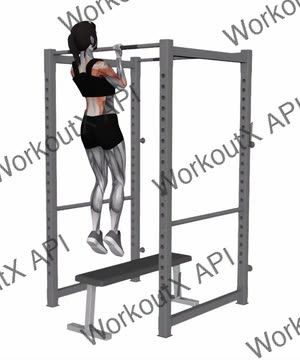
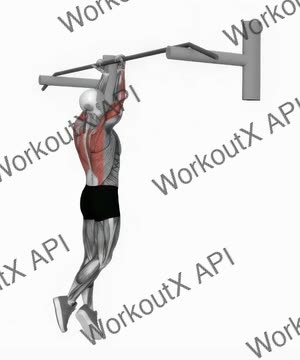
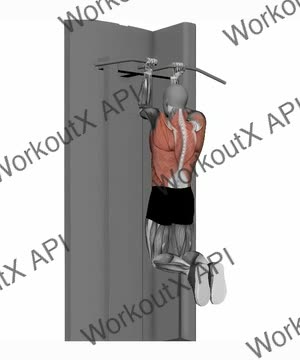
- Begin by grasping a pull-up bar with an underhand grip (palms facing you) and your hands shoulder-width apart. Hang with your arms fully extended and your legs slightly bent or crossed behind you.
- Engage your core and pull your shoulder blades down and back to start the movement.
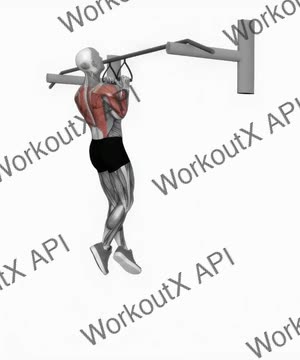
- Pull your body upward by bending your elbows and contracting your biceps, continuing until your chin is above the bar. Hold this top position (isometric hold) for a specified duration.
- After the hold, slowly lower yourself back to the starting position (negative phase), taking about 3-5 seconds to fully extend your arms. Repeat for the desired number of repetitions.
Form tips
- Focus on using your biceps and upper back muscles to lift your body, avoiding excessive momentum.
- Perform the isometric hold with control, ensuring your muscles are engaged and you are not simply hanging from the bar.
- During the negative phase, lower yourself slowly and with control to maximize muscle activation and prevent injury.
Chin-Up (Isometric and Negative) alternatives

More biceps exercises
Chin-Up (Isometric and Negative) FAQ
What muscles does Chin-Up (Isometric and Negative) work?
Chin-Up (Isometric and Negative) mainly works the biceps in the upper arms (Biceps Brachii and Latissimus Dorsi). The shoulders and forearms work as secondary muscles.
What equipment do you need for Chin-Up (Isometric and Negative)?
You need only a pull-up bar.
How many sets and reps of Chin-Up (Isometric and Negative) should I do?
Start with 2-3 sets of 30-60-second holds. Pick a load or variation where the last one or two reps are hard but your form stays clean.
Is Chin-Up (Isometric and Negative) good for beginners?
It's rated intermediate. Beginners can work up to it once they control simpler upper arms exercises.
How many calories does Chin-Up (Isometric and Negative) burn?
About 6.1 calories per minute for a person of around 70 kg, based on a MET value of 5. Ten minutes of work is roughly 61 calories; heavier people burn more.
What is a good alternative to Chin-Up (Isometric and Negative)?
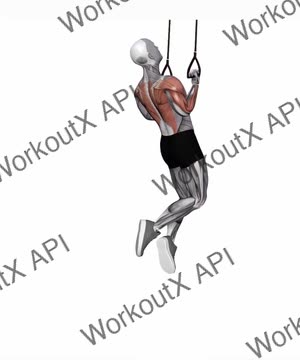
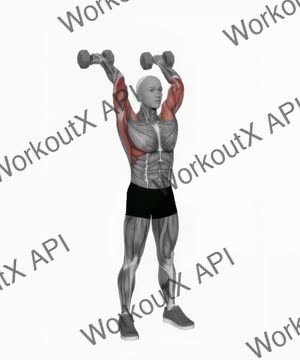
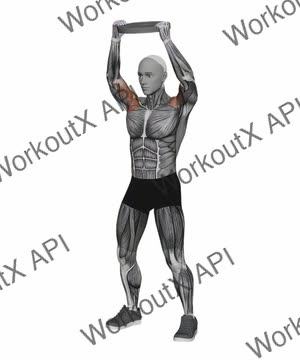
Other exercises for the biceps include Suspension Trainer With Grips Chin-Up, Plate Squat Hold Biceps Curl, Dumbbell Curl Press Extend and Plate Curl to Overhead Press.
For developers
Use Chin-Up (Isometric and Negative) in your app
Get this exercise and 1,900+ others from the WorkoutX API: 720p MP4 animations at 30 fps without the watermark, male and female models, muscles, instructions and form tips in 7 languages.
# One request returns the exercise and its 720p media links
curl "https://api.workoutxapp.com/v2/exercises/ex_STIRTQ" \
  -H "X-WorkoutX-Key: YOUR_API_KEY"

{
  "id": "ex_STIRTQ",
  "name": "Chin-Up (Isometric and Negative)",
  "model": "male",
  "target": "Biceps",
  "equipment": "Body Weight",
  "media": {
    "mp4": "https://…/ex_STIRTQ/mp4-720.mp4?…",
    "poster": "https://…/ex_STIRTQ/poster.jpg?…"
  }
}